PPO is the most popular type of employer health plan in the US, and for good reason: it gives you the most freedom to choose your own doctors. That freedom has a price, though. This guide explains what PPO stands for, how a PPO plan works, how out-of-network coverage really plays out on your bill, how it compares to HMO and EPO plans, and whether the extra flexibility is worth it for you.
Quick answer
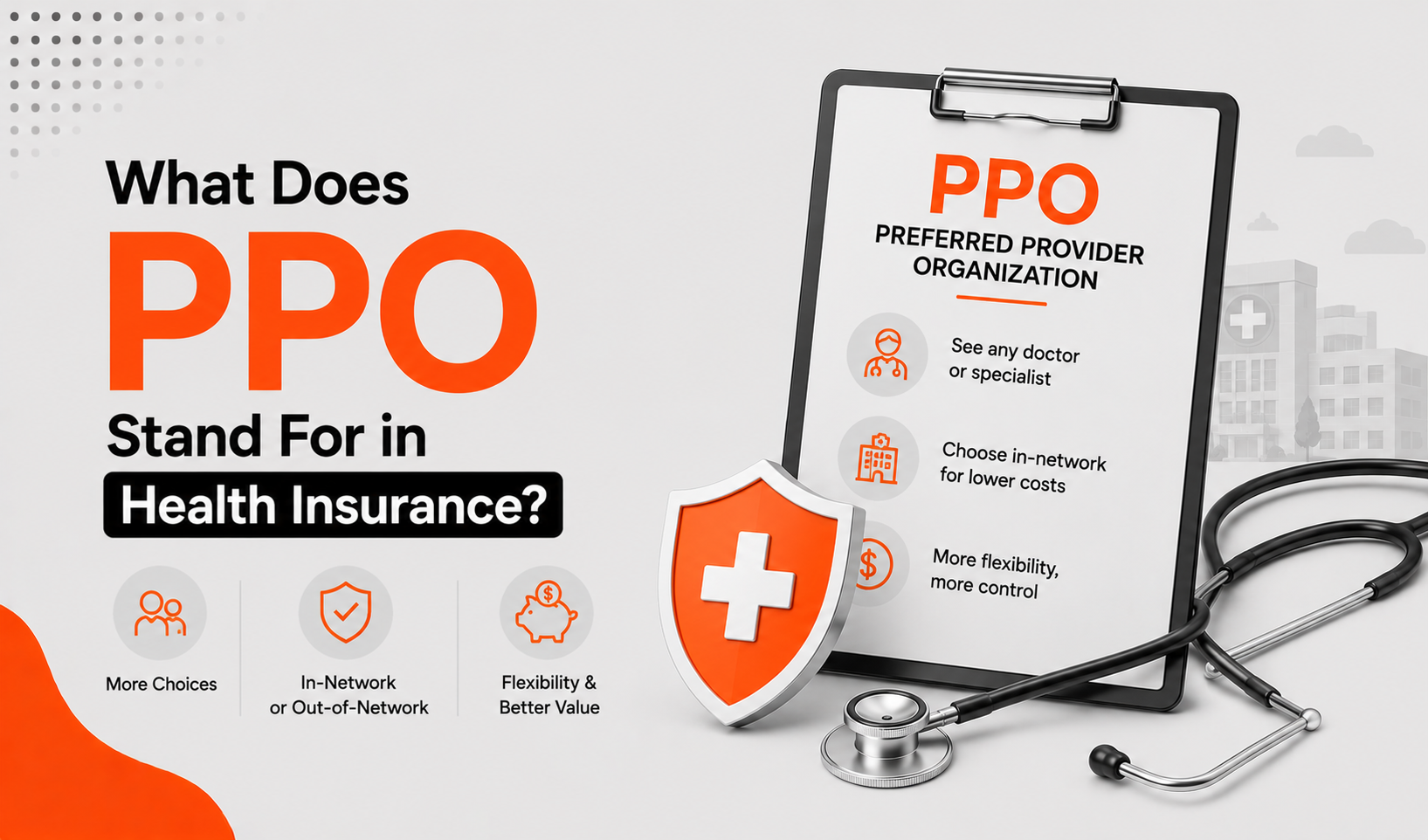
PPO stands for Preferred Provider Organization. You pay less when you use the plan's preferred (in-network) providers, but you can also see out-of-network doctors, just at a higher cost.
No referrals are needed to see specialists. The trade-off is that PPOs usually have the highest premiums of the common plan types.
Explore health insurance options with Zolve.
How Does a PPO Work?
A Preferred Provider Organization contracts with a network of doctors and hospitals that agree to lower, negotiated rates. You get the best price by staying in that network, but unlike an HMO or EPO, a PPO also pays a portion of the bill if you go out of network. You do not need a primary care doctor to coordinate your care, and you do not need referrals to see a specialist, so you can book directly with whoever you choose.
PPOs are the single most common plan type at US employers; in the 2025 KFF benchmark survey, about 46% of covered workers were in a PPO. They also tend to cost the most: the average PPO premium that year was roughly $9,818 for single and $28,272 for family coverage, higher than the all-plan average.
What is out-of-network flexibility?
If your preferred surgeon or a top hospital is out of network, a PPO still shares the health insurance cost instead of leaving you with the entire bill. You will pay more, because a separate, higher deductible and coinsurance usually apply to out-of-network care, but you keep the option. For an EPO or HMO, that same care would usually be entirely your responsibility.
One catch to understand is balance billing. An out-of-network provider has not agreed to your insurer's rates, so they can bill you the difference between their charge and what your plan considers reasonable, on top of your coinsurance. That is why even with a PPO, staying in-network is almost always cheaper, and why you should confirm what your plan pays for out-of-network care before a big procedure.
PPO vs the other plan types
Is a PPO worth the higher premium?
- A PPO makes sense if you travel often, want specific specialists, split time between cities, or simply value not being tied to a single network.
- You may not need one if your preferred doctors are already in a cheaper plan's network and you rarely go out of network; an EPO or HMO could save you a lot of money.
- Always compare total cost: a PPO's higher premium only pays off if you actually use the out-of-network flexibility. See Zolve's insurance for young adults for how to weigh premium against how much care you expect.
A quick cost comparison
To see why the premium difference matters, imagine three plans covering the same person in the same city, each with similar benefits but a different network model. The numbers below are illustrative, not quotes, but they mirror how the tiers usually line up in the real market.
Explore health insurance options with Zolve
If you never leave the network, all three plans pay the same for your in-network care, and you simply paid the PPO's higher premium for an option you did not use. The PPO wins only when you actually need a provider the cheaper plans would not cover at all. That is the entire calculation in one sentence: a PPO is insurance against being locked out of a specific doctor or hospital, and you decide whether that protection is worth the extra premium.
No Surprises Act in PPO
Balance billing used to catch PPO members off guard, especially in emergencies or when an out-of-network specialist treated them at an in-network hospital without their knowledge. Federal protections under the No Surprises Act now limit surprise out-of-network bills for most emergency care and for certain services at in-network facilities, so you generally cannot be balance-billed more than your normal in-network cost-sharing in those situations. It does not cover every scenario, so for planned, non-emergency out-of-network care you should still confirm costs in advance, but it removes much of the old risk from emergencies.
How to choose the right PPO plan?
- List the doctors and hospitals you want to keep, and check whether they are in-network (which lowers your cost even on a PPO).
- Compare the in-network and out-of-network deductibles; the out-of-network one is usually much higher.
- Check the out-of-pocket maximum, which is your true worst-case cost for the year.
- Confirm your prescriptions are on the plan's drug list.
- Add the annual premium to your expected care costs, then compare that total against a cheaper EPO or HMO.
PPOs are the plan people pick when they dislike the idea of asking a gatekeeper for permission to see a specialist. The common regret generally, though, is paying a premium for out-of-network freedom they never actually use. The advice that repeats is simple: if all your doctors are in-network anyway, the PPO premium may be money left on the table. Newcomers in particular often do not yet have a fixed set of doctors, so a lower-cost EPO or HMO can be the smarter starting point until your needs settle.
Explore health insurance options with Zolve.
FAQ
Do I need a referral with a PPO?
No. You can see specialists directly, in or out of network.
Why are PPOs more expensive?
Because they cover out-of-network care and give you more choice, which raises the plan's cost.
PPO or EPO for a newcomer?
If you have no fixed doctors and stay local, an EPO is often cheaper. Choose a PPO if you need out-of-network flexibility or travel a lot.
Does a PPO cover out-of-network care fully?
No. It pays a smaller share out of network, a higher deductible applies, and the provider may balance-bill you for the rest.
Read more: