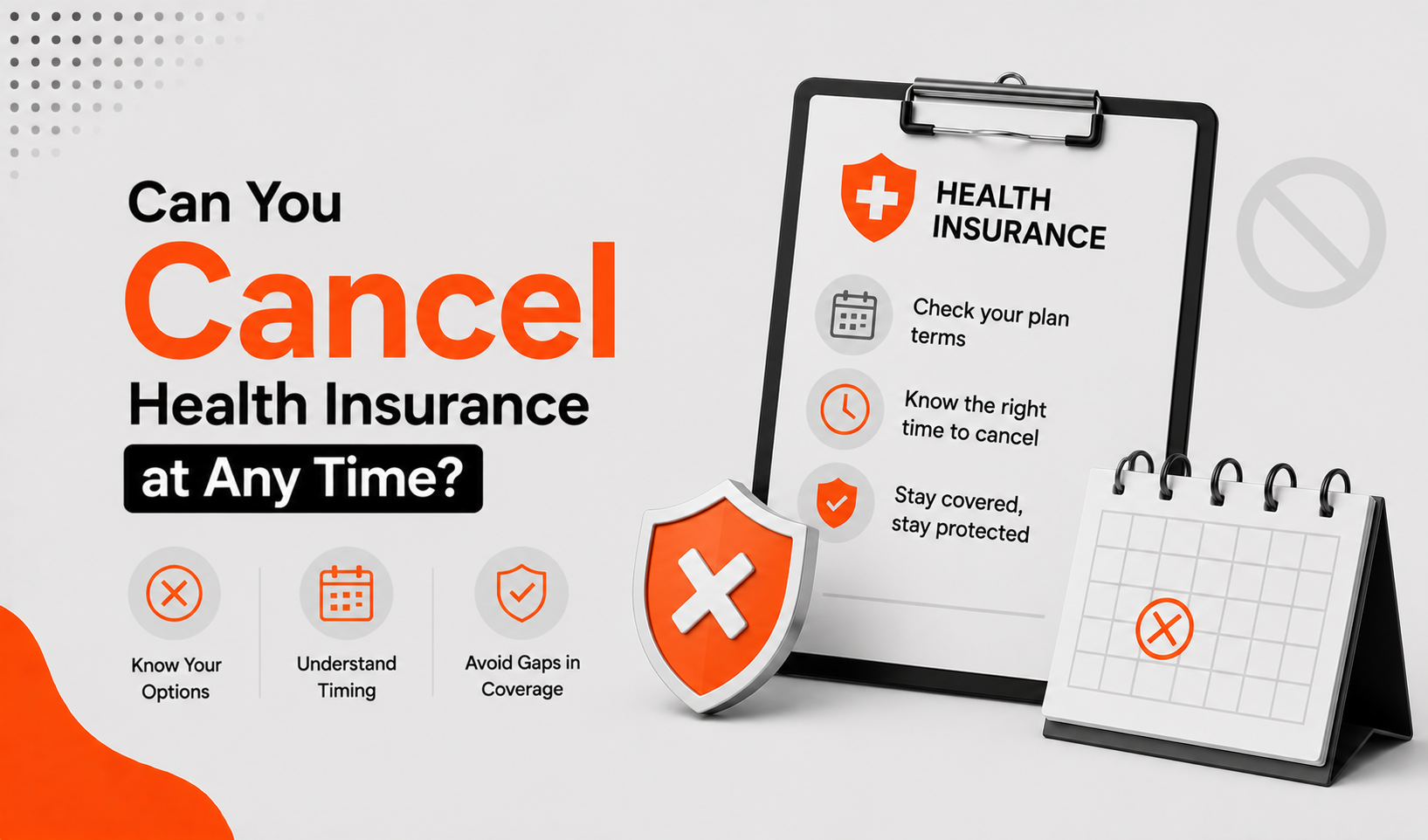
Yes, you can usually cancel a health insurance plan whenever you want, but whether you should, and what happens next, depends on the type of plan and what coverage you have lined up. Cancelling at the wrong moment can leave you stuck without insurance for months. This guide covers the rules for Marketplace and job-based plans, the coverage-gap trap, what happens to your deductible when you switch, can you cancel health insurance at any time and how to cancel the right way.
Quick answer
- Marketplace plan: you can end it any time through your account. You can even set a future end date.
- Job-based plan: you generally can only drop it during open enrollment or after a qualifying life event, because of employer and tax rules.
The catch: if you cancel without new coverage lined up, you may have to wait until the next Open Enrollment to get insured again, unless you qualify for a Special Enrollment Period.
Explore health insurance options with Zolve.
Cancelling a Marketplace plan
If you bought your plan through HealthCare.gov or a state exchange, you can end coverage at any time by updating your account. Coverage can end as soon as the day you cancel, or you can pick a later end date, which is useful if you know new coverage starts on the first of next month. If only some people on the application are dropping the plan, the timing can differ, so read the confirmation carefully and keep a copy.
Cancelling a job-based plan
Employer coverage works differently. Because premiums are often paid with pre-tax dollars through a cafeteria plan, the IRS restricts when you can change or drop your election mid-year. Usually you can only cancel during your employer's open enrollment or after a qualifying life event, such as getting other coverage, marriage, divorce, or a new baby. Ask your HR or benefits team about the exact process and timing before you assume you can cancel in the middle of the year.
The big risk: a coverage gap
The main danger of cancelling is being uninsured with no easy way back in. Outside Open Enrollment (roughly November 1 to January 15), you can only buy a new Marketplace plan if you have a qualifying life event. Importantly, voluntarily cancelling your own coverage does not count as a qualifying event, so it will not open a Special Enrollment Period. If you cancel and then need care before the next Open Enrollment, you could be paying full price out of pocket, and a single emergency can cost tens of thousands of dollars.
Before you cancel, line up the next plan
Have your new coverage confirmed and its start date in hand before you end the old plan. If you are switching, set the old plan to end the day before the new one begins, so you are never uninsured even for a single day.
Learn: Is it illegal to not have a health insurance?
What happens to your deductible when you switch?
This surprises a lot of people. When you switch to a new plan, your deductible and out-of-pocket spending usually reset to zero, because those totals are tied to the specific plan and plan year. So if you have already spent a lot toward your deductible this year, cancelling mid-year and starting fresh could mean paying a new deductible all over again. If you are close to meeting your out-of-pocket maximum, it may be worth finishing planned care before you switch.
When does cancelling health insurance make sense?
- You got a new job with employer coverage starting soon.
- You now qualify for Medicaid, which you can enrol in any time of year.
- You are switching to a better plan during Open Enrollment or a Special Enrollment Period.
- You are leaving the US and no longer need US coverage.
- You gained new coverage through a spouse or parent's plan.
What about COBRA?
If you are cancelling because you left a job, COBRA lets you keep your former employer's plan for a limited time, but you pay the full premium yourself, which is usually much more than you paid as an employee. It can be a useful short bridge if you have ongoing care and do not want to reset your deductible, but for many people a Marketplace plan (with a possible subsidy) is cheaper. Losing job-based coverage is itself a qualifying life event, so it opens a Special Enrollment Period to buy on the Marketplace.
How to cancel the health insurance right way?
- Confirm your new coverage and its exact start date first.
- For a Marketplace plan, log in, choose to end coverage, and set the end date to align with the new plan.
- For a job-based plan, contact HR and follow their process; keep written confirmation.
- Keep proof of cancellation and of your new coverage in case of billing questions.
- Watch for a final premium bill; simply stopping payment without formally cancelling can hurt your record and leave you owing money.
What’s the chatter online?
The recurring cautionary tale online is someone who cancelled to save money, then discovered they could not re-enrol until the next Open Enrollment because a voluntary cancellation is not a qualifying event. The advice that repeats is to never cancel until the replacement plan is active, and, if money is the issue, to look at cheaper plans or Medicaid rather than going uninsured. People leaving the country generally find cancelling straightforward, but they still recommend documenting it and confirming the final bill is settled.
Explore health insurance options with Zolve.
FAQ
Can I cancel my Marketplace plan any time?
Yes. You can end it whenever you like and even choose a future end date.
Will I owe a penalty for cancelling?
There is no federal penalty. But five states and DC fine uninsured residents, so check your state before you cancel.
Can I get coverage again after cancelling?
Only during Open Enrollment or with a qualifying life event. A voluntary cancellation itself does not open a Special Enrollment Period.
Does my deductible carry over to a new plan?
Usually no. Switching plans typically resets your deductible and out-of-pocket totals to zero.
Read more:
What is coinsurance in health insurance?