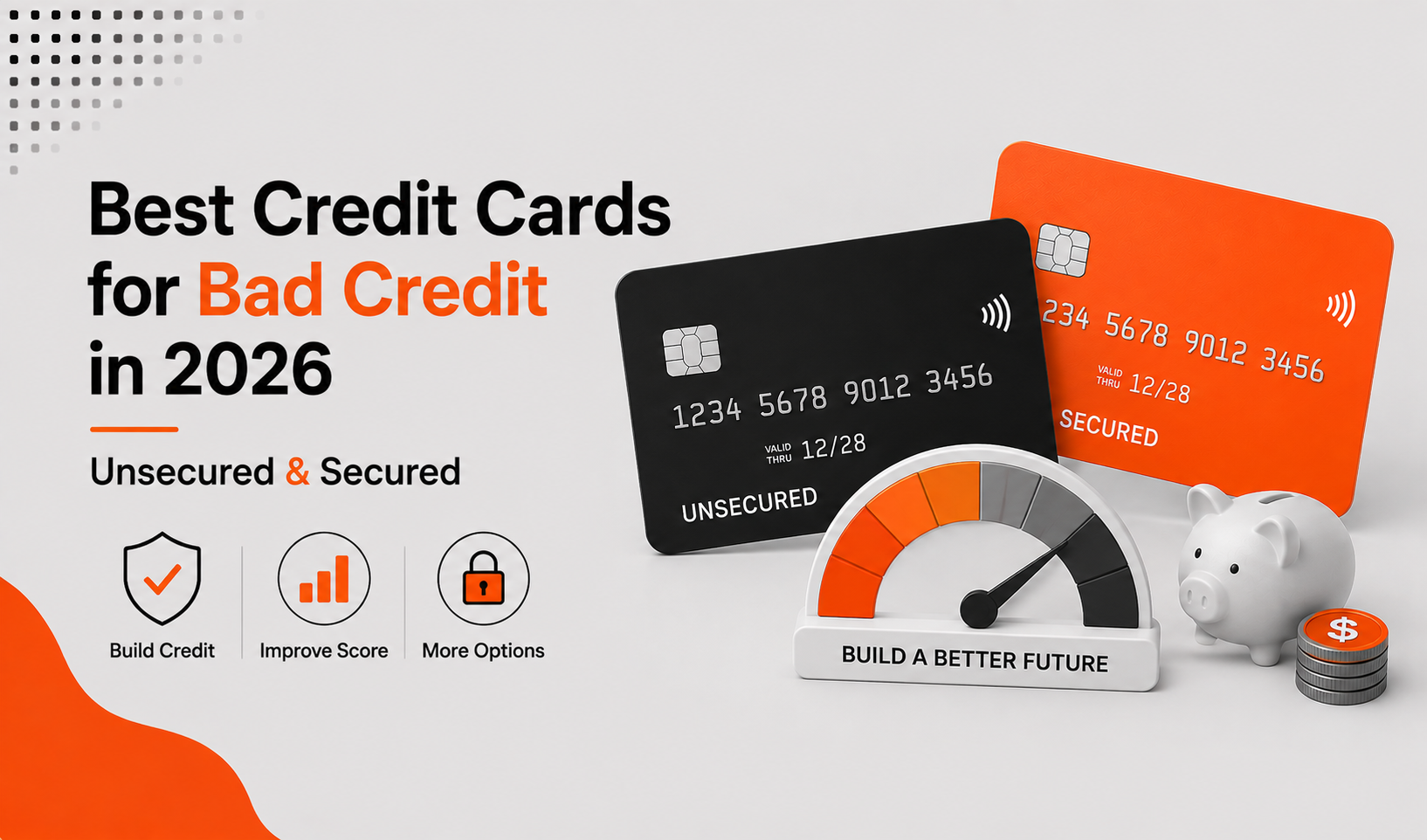
- Unsecured vs. secured cards: Unsecured cards require no deposit but often carry higher fees, while secured cards use a cash pledge to guarantee credit.
- Key 2026 features: Look for free credit‑reporting, low APR, and no annual fee to maximize score‑building potential.
- Approval tips: A stable income, low credit‑utilization, and correct documentation boost chances even with a sub‑600 score.
Finding the best credit card for bad credit can feel like searching for a needle in a haystack, especially when you’re juggling everyday expenses and trying to repair a bruised score. In 2026, lenders have introduced more flexible unsecured and secured cards, but the fine print still matters. This guide walks you through the latest product features, fees, and approval odds to rebuild credit history for U.S. residents. Whether you need a card that reports to all three credit bureaus or one with a low security deposit, you’ll leave with a clear action plan.
Understanding Bad Credit and How Credit Cards Can Help Rebuild It
Bad credit usually means a FICO score below 620, often caused by missed payments, high utilization, or limited credit history. Contrary to popular belief, a responsible credit‑card use can accelerate recovery. By making on‑time payments and keeping utilization under 30%, you generate positive tradelines that the major bureaus (Equifax, Experian, TransUnion) recognize. The CFPB explains that credit‑building cards are among the fastest ways to improve a low score, especially when paired with a budgeting routine.
Key Features to Look for in a Bad‑Credit Credit Card in 2026
| Feature | Why It Matters | Typical Offering (2026) |
|---|---|---|
| Reporting to all three bureaus | Ensures every on‑time payment lifts your score. | Most cards report; a few still limit to two. |
| Annual fee | Fees eat into limited budgets; $0‑$25 is ideal. | $0‑$35, with some waivable first‑year promotions. |
| APR (intro & ongoing) | Lower APR reduces debt if you carry a balance. | Intro 0% for 6‑12 months; ongoing 22%‑27%. |
| Security deposit requirement | Secured cards need a cash pledge; the lower, the better. | $200‑$500 typical; some offer $0‑$100 deposits. |
Pro tip: Choose a card that offers automatic credit‑line increases after 6 months of on‑time payments this can boost your utilization ratio without extra hassle.
Top Unsecured Credit Cards for Bad Credit in 2026
Unsecured cards don’t demand a cash deposit, making them attractive for cash‑strapped users. Below are three that consistently rank high among US consumers and have been vetted by the Federal Reserve for transparent fee structures.
- Capital One Platinum Credit Card – No annual fee, 28.99% APR for the first 9 months, reports to all bureaus.
- Discover it® Secured (offers unsecured upgrade) – Starts as secured but upgrades after 12 months of good behavior, cash‑back on purchases.
Best Secured Credit Cards for Bad Credit in 2026 (e.g., Discover, Chime)
Secured cards act as a safety net for lenders and often provide the quickest path to a higher credit line after a year of good use.
| Card | Deposit Minimum | Annual Fee | Rewards |
|---|---|---|---|
| Discover it® Secured | $200 | $0 | 2% cash back on groceries & gas |
| Chime Secured Credit Builder | $200 | $0 | No cash back, but automatic credit‑line increase |
How to Choose Between Unsecured and Secured Cards: Pros, Cons, and Cost Comparison
Both card types can rebuild credit, but the right fit depends on your cash flow, comfort with deposits, and long‑term goals.
| Aspect | Unsecured | Secured |
|---|---|---|
| Up‑front cost | Usually $0‑$35 annual fee | Security deposit $100‑$500 |
| Credit‑limit growth | Limited until credit improves | Can increase with additional deposits |
| Risk of debt | Higher if balance isn’t paid | Deposit cushions lender risk |
| Upgrade path | May stay unsecured forever | Often convertible to unsecured after 12 months |
Step‑by‑Step Guide to Applying for a Bad‑Credit Card and Getting Approved
- Check your current score: Use free tools from AnnualCreditReport.com to verify your baseline.
- Gather proof of income: Pay stubs, bank statements, or a recent tax return.
- Pick a card that matches your profile: Review the comparison tables above and note fees, APR, and deposit needs.
- Complete the online application: Fill out personal details, upload documents, and submit. Most issuers give an instant decision.
- Activate and set up automatic payments: Prevent missed payments—set up alerts.
Tips for Managing Your Bad‑Credit Card Responsibly and Improving Your Score
Expert advice: Keep utilization under 30% and pay the full balance each month to avoid interest while sending positive data to the bureaus.
Additional habits that accelerate score recovery include:
- Set up payment reminders or autopay.
- Review your credit reports yearly for errors (free via CFPB).
- Avoid opening multiple new accounts within a 6‑month window.
Conclusion
Choosing the best credit card for bad credit in 2026 hinges on understanding fees, reporting practices, and whether a secured or unsecured product aligns with your cash flow. By focusing on cards that report to all three bureaus, carry low or no annual fees, and offer modest APRs, you can rebuild your score faster.
FAQs
Can I get a credit card with a score below 600?
Yes. Secured cards typically accept scores in the 500‑600 range, while some unsecured cards (like Capital One Platinum) may approve applicants with scores as low as 550, provided income and employment are stable.
Do secured cards help my credit score as quickly as unsecured cards?
Both help equally because the key factor is consistent on‑time reporting. Secured cards may build credit slightly faster if the issuer offers automatic upgrades to unsecured status.
What is the average credit‑limit for a bad‑credit card?
In 2026, unsecured cards usually start at $300‑$500, while secured cards mirror the security deposit, often $200‑$500.
Will Zolve report to all three major credit bureaus?
Yes. Zolve’s credit card reports to Experian, Equifax, and TransUnion each month, ensuring full credit‑history impact.
How long does it take to see a score increase after using a rebuilding card?
Most users notice a modest bump (10‑30 points) after three to six months of on‑time payments and low utilization.