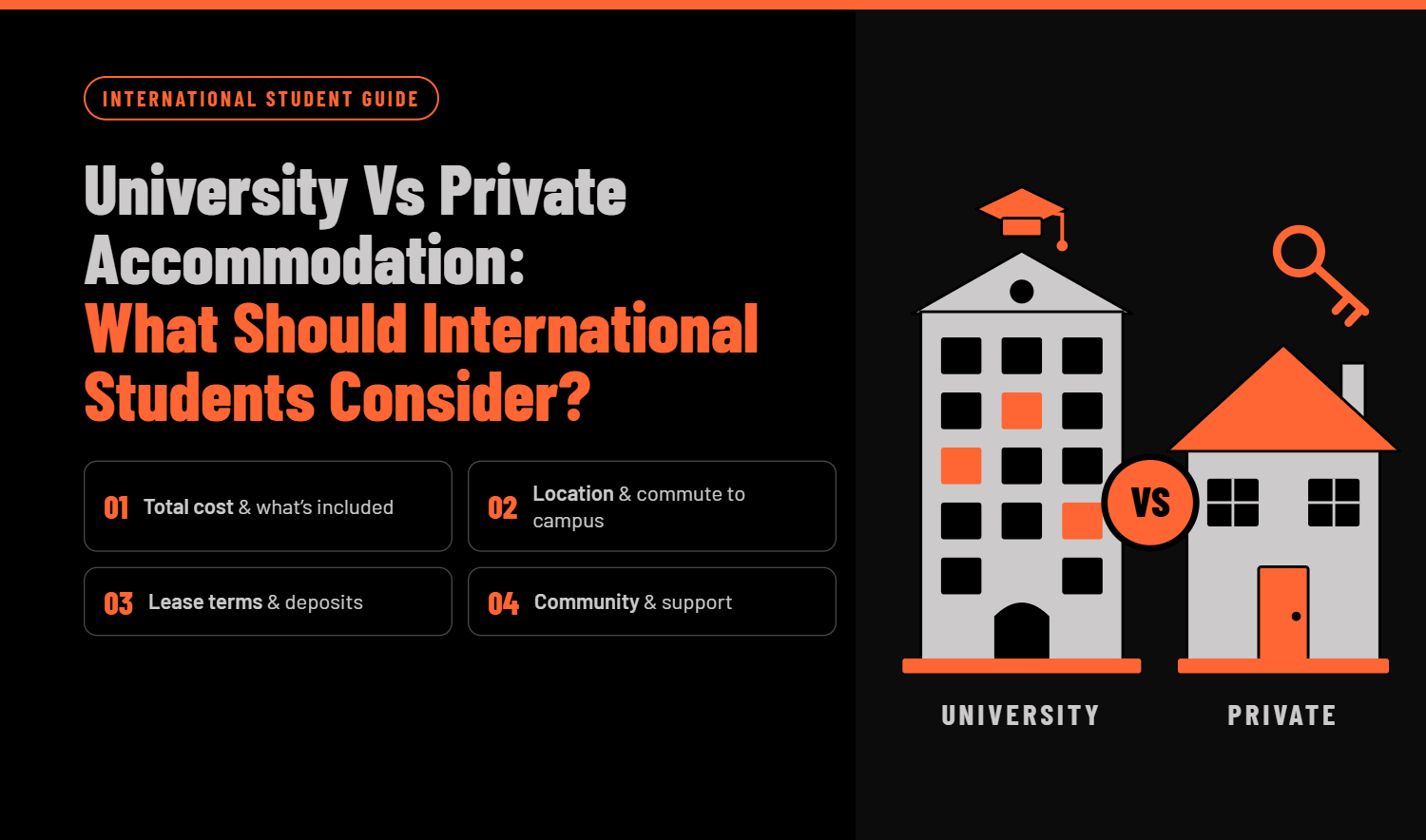
Moving to the United States for study is thrilling, but deciding where to live can feel like a maze. In this post I break down the essential factors that shape the choice between university‑run dorms and private apartments, from visa‑friendly lease terms to hidden costs and community vibes. By weaving in the latest July 2026 data, Reddit chatter, and real‑world anecdotes, I’ll help you weigh the trade‑offs so you can land a safe, affordable spot that fits your academic schedule and cultural comfort. Let’s unpack the “University vs Private Accommodation: What Should International Students Consider?” question together.
- Budget matters most: On‑campus housing often bundles utilities, while private rentals may be cheaper but add extra fees.
- Visa compliance: Your F‑1 visa may restrict off‑campus moves during the first semester; know the rules early.
- Community support: Dorms provide built‑in social networks, whereas private apartments give more independence.
- Lease flexibility: Short‑term contracts are common on campus; private leases usually require a 12‑month commitment.
- Financial tools: Opening a US checking account with Zolve can simplify rent payments and avoid foreign transaction fees.
What You Need to Know: University vs Private Accommodation Overview
Both options have distinct advantages, and the right choice hinges on cost structure, lease terms, and cultural fit. Below is a snapshot of the most‑asked criteria among international students on Reddit’s r/InternationalStudents and r/CollegeHousing as of July 2026.
| Feature | University (On‑Campus) | Private (Off‑Campus) |
|---|---|---|
| Average monthly rent | $1,200 – $1,800 | $900 – $1,600 |
| Utilities included | Yes | No (separate bills) |
| Lease length | Semester or academic year | Typically 12 months |
| Furniture | Fully furnished | Often unfurnished |
| Social programming | High (events, RA support) | Varies widely |
| Visa‑friendly policies | High (on‑campus housing often required for first term) | Depends on landlord |
Cost Comparison
The biggest driver for most students is the total out‑of‑pocket expense. While private apartments may appear cheaper per month, remember to add utility bills, internet, and renter’s insurance. On‑campus rates, though higher, bundle these costs, which can simplify budgeting especially when you’re still learning to navigate the US banking system.
Lifestyle and Community
Living on campus puts you in the heart of campus life—study groups, cultural clubs, and instant access to dining halls. Private housing offers more personal space and the chance to explore neighborhoods, but you’ll need to seek out community events yourself. Many international students report that the “home‑away‑from‑home” feeling is stronger in dorms during the first year.
Step‑By‑Step Guide to Choosing Your Home
- Assess your visa timeline: Verify whether your F‑1 visa requires on‑campus residence for the first semester (USCIS guidance).
- Set a realistic budget: Include rent, utilities, groceries, and a buffer for emergencies; Zolve’s budgeting tools can help you track expenses in real time.
- Research campus housing deadlines: Most universities open applications 6‑9 months before the semester starts.
- Visit neighborhoods virtually or in person: Use Google Street View or schedule a short trip to gauge safety and commute times.
- Compare lease terms: Look for clauses about subletting, early termination, and required guarantors (many private landlords need a US‑based co‑signer).
- Secure a US checking account: With Zolve, you can open an account before you arrive, pay rent online, and avoid costly wire transfers.
Common Questions Answered
Pro tip: Keep a digital copy of your lease and I‑20 on your phone; US immigration officers often ask for proof of residence during domestic travel.
Can I live off‑campus during my first semester?
Most universities require on‑campus housing for the first term to satisfy SEVIS regulations, but exceptions exist if you can prove a safe off‑campus arrangement. Check your school’s international student office for specifics.
Do I need a US credit history to rent privately?
Many landlords run a credit check, which can be a hurdle for newcomers. Offering a larger security deposit or a co‑signer, or using a Zolve credit card to start building credit, can improve your chances.
What about utilities and internet?
Private rentals typically require you to set up utilities yourself. Zolve’s bill‑pay feature lets you schedule automatic payments, preventing late fees that could affect your credit.
Is on‑campus housing more secure?
University dorms often have 24‑hour security, key‑card access, and resident advisors, providing a safer environment for first‑year students unfamiliar with the area.
How do I find affordable private apartments?
Websites like Craigslist, PadMapper, and university bulletin boards list options. For curated recommendations, see our guide on Top 5 Affordable Accommodations for Students and Travelers in the USA.
Tips for International Students
- Start early: Application windows for on‑campus housing fill quickly; aim to apply at least three months before classes begin.
- Leverage student groups: International student associations often share sublet opportunities that bypass the need for a US guarantor.
- Understand your lease language: Terms like “security deposit” and “late fee” can differ from your home country; ask for clarification if needed.
- Use Zolve’s multi‑currency account: Pay rent in USD without conversion fees, even if your income is in another currency.
- Read local reviews: Platforms like Reddit’s r/CityNameHousing give real‑time insights into landlord responsiveness and neighborhood safety.
For a deeper dive into finding the right place as an Indian student, check out our article Finding Accommodation in the US: Tips for Indian Students.
How Zolve Can Help
From opening a US checking account without a Social Security Number to issuing a credit card that helps you build credit from day one, Zolve removes the financial friction of moving abroad. Explore Zolve’s international student banking solutions and focus on your studies, not on banking hassles.
Conclusion
Choosing between university and private accommodation hinges on budget, visa constraints, and lifestyle preferences. By evaluating costs, lease flexibility, and community support, you can make an informed decision that aligns with your academic goals and cultural comfort. Remember, Zolve’s seamless banking tools can simplify rent payments and credit building, no matter which housing path you take. The primary question—University vs Private Accommodation: What Should International Students Consider?—becomes clearer when you weigh these factors early and plan ahead.
FAQs
What are the typical lease lengths for on‑campus housing?
Most universities offer semester‑long or full‑year contracts, allowing you to renew or switch housing each academic term.
Do I need a US guarantor for a private apartment?
Many private landlords require a US‑based co‑signer, but offering a higher security deposit or using a Zolve credit card to demonstrate financial responsibility can sometimes waive this need.
How can I pay rent without a US bank account?
Zolve lets you open a US checking account before arrival, enabling online rent payments via ACH without incurring foreign transaction fees.
Is it safer to live on campus during my first year?
On‑campus housing typically includes 24‑hour security, key‑card access, and resident advisors, offering a higher level of safety for newcomers.
Can I sublet my university dorm room?
Policies vary by institution; some allow subletting with approval, while others prohibit it entirely. Check your housing contract carefully.
References & Sources
- USCIS – Students and Exchange Visitors: verifies visa‑related housing requirements.
- National Center for Education Statistics – Campus Housing Data (2024‑2025): provides average on‑campus rent figures.
- Reddit – International Students Housing Discussion (July 2026): reflects current student concerns and preferences.
- Zolve Official Site: source for banking product details and financial tools mentioned.
References
- USCIS guidance — https://www.uscis.gov/working-in-the-united-states/students-and-exchange-visitors
- Top 5 Affordable Accommodations for Students and Travelers in the USA — https://zolve.com/blog/top-5-affordable-accommodations-for-students-and-travelers-in-the-usa
- Finding Accommodation in the US: Tips for Indian Students — https://zolve.com/blog/finding-accommodation-in-the-us-tips-for-indian-students
- Explore Zolve’s international student banking solutions — https://zolve.com
- National Center for Education Statistics – Campus Housing Data (2024‑2025) — https://nces.ed.gov/fastfacts/display.asp?id=91
- Reddit – International Students Housing Discussion (July 2026) — https://www.reddit.com/r/InternationalStudents/comments/xyz123/
- Zolve Official Site — https://www.zolve.com