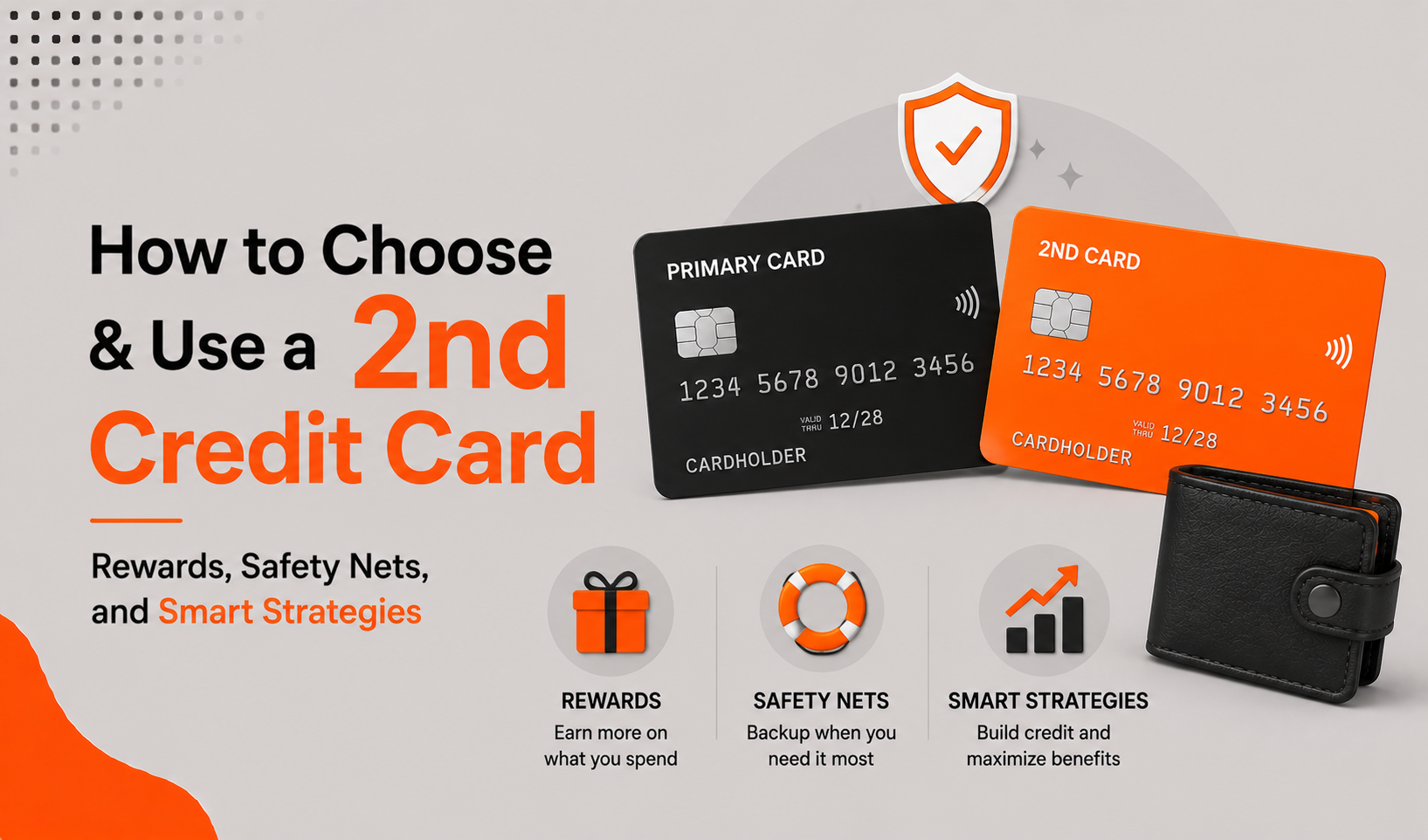
Adding a 2nd credit card in 2026 can feel like a power move—if you know which card fits your spending habits, when the timing is right, and how to avoid the common pitfalls. From juggling a travel rewards card alongside a cash‑back staple, to using a backup line of credit for fraud protection, the decision impacts your credit score, monthly budgeting, and long‑term financial goals. Let us check out the latest market trends, and real‑world strategies so you can confidently choose, activate, and manage a second card that truly works for you.
- Timing matters: The best moment to apply for a 2nd credit card aligns with upcoming intro‑APR windows and major travel seasons.
- Match rewards to lifestyle: Pair a cash‑back card for everyday spend with a travel card for trips to maximize category bonuses.
- Safety net benefits: A second card shields you from fraud downtime and provides backup credit during emergencies.
- Credit score stewardship: Proper payment timing and low utilization keep your score healthy while you juggle multiple cards.
When Is the Right Time in 2026 to Get a 2nd Credit Card?
According to the latest Federal Reserve credit report (Q2 2026), intro‑APR offers peak in March and September, coinciding with major retail holidays. Conversations online note that applying shortly before these windows gives you the longest interest‑free period. Additionally, if you’ve just received a raise or a stable bonus, your debt‑to‑income ratio improves, boosting approval odds.
Key signal: Wait until your credit utilization drops below 30% on your existing card before submitting a new application.
How to Choose the Best 2nd Credit Card for Your Goals (Rewards, Intro APR, Sign‑up Bonuses)
Start by listing your top three spending categories. Then compare cards that excel in those areas while offering a strong intro APR or sign‑up bonus. Below is a quick snapshot of three popular 2026 options:
| Feature | Cash‑Back Card | Travel Rewards Card | 0% Intro APR Card |
|---|---|---|---|
| Annual fee | $0 | $95 | $0 |
| Welcome bonus | 5% back on first $1,000 | 50,000 points | $200 statement credit |
| Intro APR | 12 months 0% | 12 months 0% on purchases | 18 months 0% on balances |
| Best category | Everyday purchases | Travel & dining | Balance transfers |
Pro tip: Use a spreadsheet to calculate the net value of each bonus after factoring annual fees.
Step‑by‑step: Applying for Your 2nd Card
- Check your credit score: Use free tools like AnnualCreditReport.com; a score of 680+ dramatically improves approval odds.
- Gather documentation: Have your latest pay stub, tax return, and address verification ready for a smooth online application.
- Submit the application: Most issuers process within minutes; keep a note of the decision timeline.
- Activate and set up alerts: Enable transaction notifications to spot fraud instantly.
Maximizing Introductory Offers and Rewards with Two Cards
When you hold a cash‑back card and a travel card, you can layer rewards on large purchases. For example, a $3,000 airfare bought with the travel card earns 3× points, while the cash‑back card’s 5% grocery bonus covers your hotel spend. To keep track, recommendation is simple, reward matrix that logs each purchase category against the card that yields the highest return.
Pro tip: Set a calendar reminder two months before any intro‑APR expires; this gives you time to either pay off the balance or transfer it to another 0% offer.
Using a 2nd Card as a Safety Net: Fraud Protection and Backup Credit
Data from the Consumer Financial Protection Bureau (2026) shows that 1 in 5 U.S. consumers experiences a credit‑card breach each year. Having a second card means you can freeze the compromised card without losing purchasing power. Most issuers now provide instant virtual numbers, which you can assign to high‑risk online merchants.
Key takeaway: Keep the backup card’s limit low (e.g., $2,000) to limit exposure while still covering emergencies.
Separating Personal, Business, and Travel Expenses with Two Cards
For freelancers or side‑hustlers, dedicating one card to business expenses simplifies bookkeeping and maximizes category‑specific rewards (e.g., 3% on software). Meanwhile, a personal card can focus on groceries, gas, and everyday spend. This separation also helps during tax season; the IRS recommends clear categorization to avoid audit flags.
Managing Multiple Cards Wisely: Payments, Credit Score Impact, and Avoiding Debt
Juggling several cards doesn’t have to hurt your credit score. The key is to keep overall utilization under 30% and to make at least the minimum payment on every card by the due date.
Data highlight: The average U.S. household carries $6,501 in credit card debt (2025 Federal Reserve). By strategically using an intro‑APR card for large purchases, you could save up to $400 in interest annually.
Conclusion
Choosing the right 2nd credit card in 2026 hinges on timing, rewards alignment, and smart risk management. By pairing a high‑earning rewards card with a low‑fee backup that offers an intro APR, you can boost your earnings, safeguard against fraud, and keep your credit score healthy.
FAQs
When should I apply for a 2nd credit card in 2026?
Apply just before major intro‑APR windows in March or September, and when your current utilization is below 30%.
Can a 2nd credit card improve my credit score?
Yes, if you keep utilization low and make all payments on time; a higher total credit limit can positively influence your score.
What is the best type of 2nd card for travel?
A travel rewards card with a strong sign‑up bonus and 0% intro APR on purchases works best for frequent flyers.
How do I avoid duplicate rewards on the same purchase?
Use a reward matrix to assign each spending category to the card that offers the highest return, preventing overlap.
Is it safe to keep a backup credit card for emergencies?
Absolutely, having a low‑limit backup limits exposure while ensuring you have purchasing power if your primary card is frozen.